
Keys to a DREAM
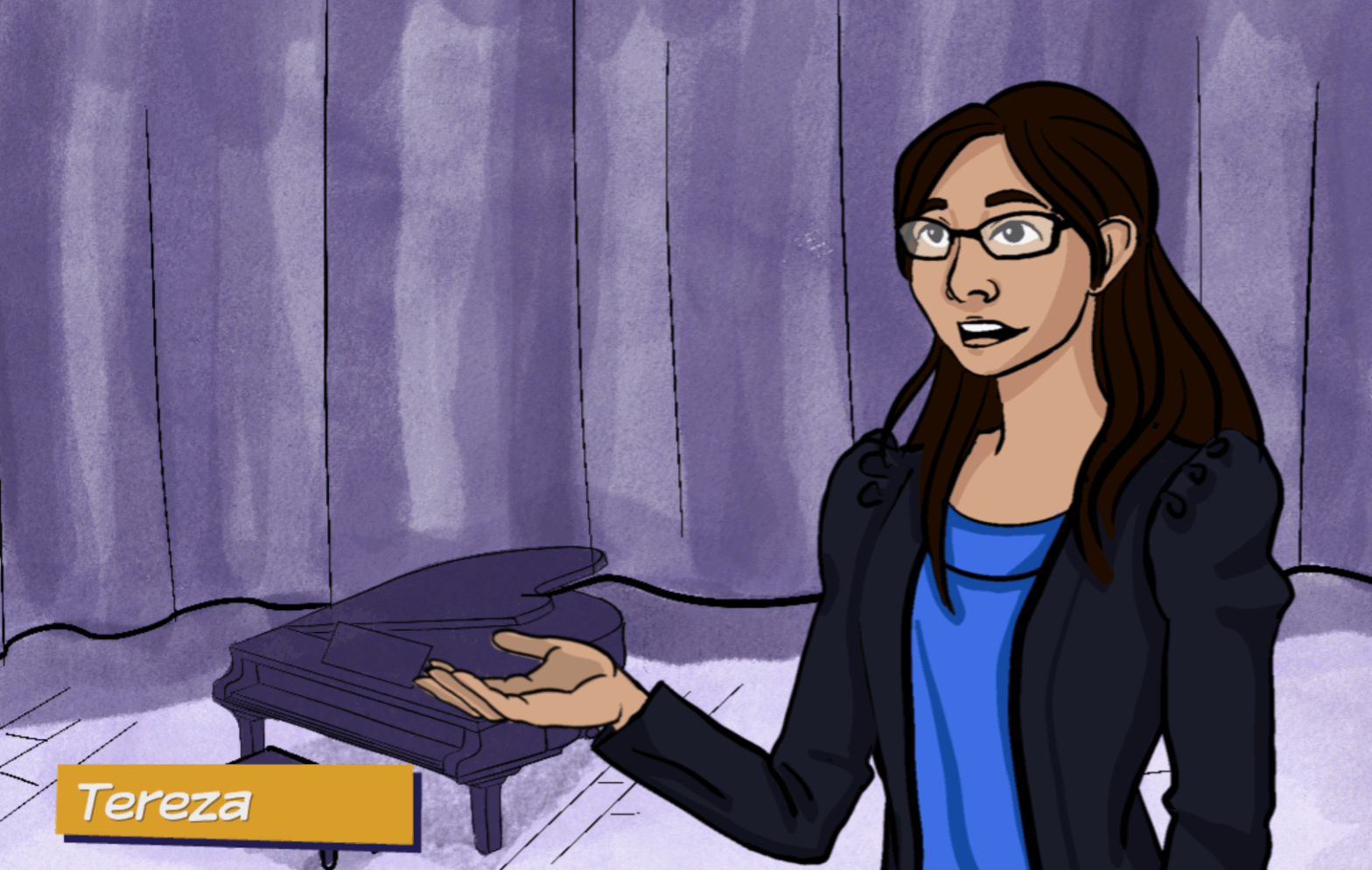
Keys to a DREAM is a biographical visual novel in which you meet Dr. Tereza Lee, musician, educator, and activist, whose experience as a poor immigrant student inspired the original DREAM Act, federal U.S. legislation first proposed in 2001 aiming to provide a pathway to legal status and citizenship for undocumented immigrants brought to the United States as children. Through interactive storytelling, players follow Tereza’s journey as a talented young student who dreamed of studying music while living with the fear that her immigration status could put those dreams out of reach.
Ideal for library patrons, secondary and post-secondary students, and independent learners alike, Keys to a DREAM introduces players to a pivotal chapter in U.S. immigration history while also developing critical thinking about civics and activism and highlighting the intersectionality of immigrant experiences and Asian American identities in U.S. history. The narrative design encourages inquiry-driven learning by players, including: learning circumstances that drive immigrants to come to the U.S.; the limitations of and unrelenting fear their undocumented status causes; calls to action to keep fighting for immigration reform.

About the game
In this visual novel, players hear from Tereza Lee, D.M.A., both as a pianist “whose touch is exceptionally clear” (Chicago Sun-Times) and as an activist advocating for immigration reform for over two decades. Players first hear an impressive piano performance – a recording of Tereza Lee herself playing Chopin’s Fantaisie-Impromptu in C-Sharp Minor, Op. 66 – followed by her inspiring story as an immigrant student with a dream to study music and her biggest supporter, Ann Monaco, then director of the Merit School of Music in Chicago.
Special thanks to Dr. Tereza Lee for her support and feedback – and even her piano performance – but especially her trust in helping to tell ‘herstory’ of Asian American student activism and tireless advocacy for immigration reform for more than two decades.
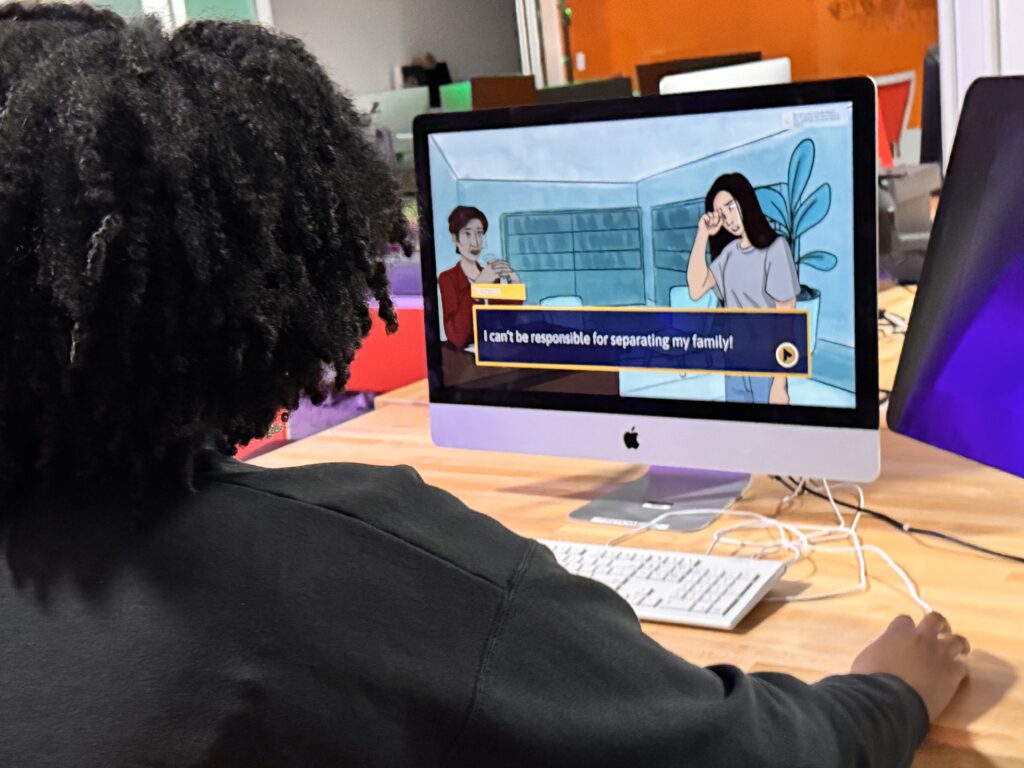
Keys to a DREAM was released on August 31, 2026, 25 years after the DREAM Act was first introduced.
Project Background
Today, Dr. Tereza Lee is an accomplished music educator and activist in New York City. However, in 2000, she was an extremely talented Asian American high school student in Chicago – with a big secret. She dreamed of attending college to study piano but feared that she wouldn’t be able to attend. The reason for this fear is what eventually led to Tereza inspiring the Development, Relief, and Education for Alien Minors (DREAM) Act, federal legislation introduced in 2001, and became the original ‘Dreamer’.
This project teaches critical and underrepresented Asian/American history through immersive and interactive storytelling. It can easily be used in informal as well as formal education settings such as in libraries and in social studies, civics, U.S. history, U.S. Government, and Asian American studies classes.
The project was inspired by Illinois’ Teaching Equitable Asian American Community History (TEAACH) Act which amended Illinois School Code in 2021 and ensuring that every public elementary and high school student in Illinois learns about the contributions of Asian Americans to the economic, cultural, social, and political development of the United States.
Educational Uses

Keys to a DREAM provides secondary school and college students the opportunity to learn about the context and circumstances for a pivotal moment in U.S. history, which led to the introduction of the bipartisan DREAM Act, and encourages them to seek out diverse stories from generations of resilient immigrant students.
This learning experience will also provide them with the opportunity to think more critically about what it means to ‘be American’ – who they themselves consider to ‘be American’ and gain empathy for immigrants and undocumented Americans.
By centering the real-life story of Tereza Lee and other DREAMers, the game brings historical events to life and invites students to explore the emotional and civic implications of immigration policy. It can complement lessons on the DREAM Act, DACA, and immigrant rights, and be integrated into classroom units on U.S. government, social studies, or Asian American history to foster empathy, civic awareness, and deeper historical understanding. After playing, learners may understand: what, how, and why the DREAM Act was introduced; the significant role it could have played in shaping the lives of undocumented youth in the U.S.; and why it has yet to be passed almost 25 years after its introduction.
Development, Relief, and Education for Alien Minors (DREAM) Act
The first version of the Development, Relief, and Education for Alien Minors (DREAM) Act was introduced in 2001. In part because of the publicity around that bill, young undocumented immigrants have been referred to as “Dreamers.” Over the past 20 years, at least 20 versions of the Dream Act have been introduced in Congress. While the various versions of the bill have contained some key differences, they all would have provided a pathway to legal status for undocumented people who came to this country as children.
Some versions of the Dream Act have garnered as many as 48 cosponsors in the U.S. Senate and 205 in the House of Representatives. However, despite bipartisan support for each iteration of the bill, none have become law. To date, the 2010 bill came closest to full passage when it passed the House but fell just five votes short of the 60 needed to proceed in the Senate.
For more information on the DREAM Act, please visit the American Immigration Council website.
Project Team
Lien B. Tran – producer, director, lead game designer
Tereza Lee – protagonist, pianist, herstory subject matter expert
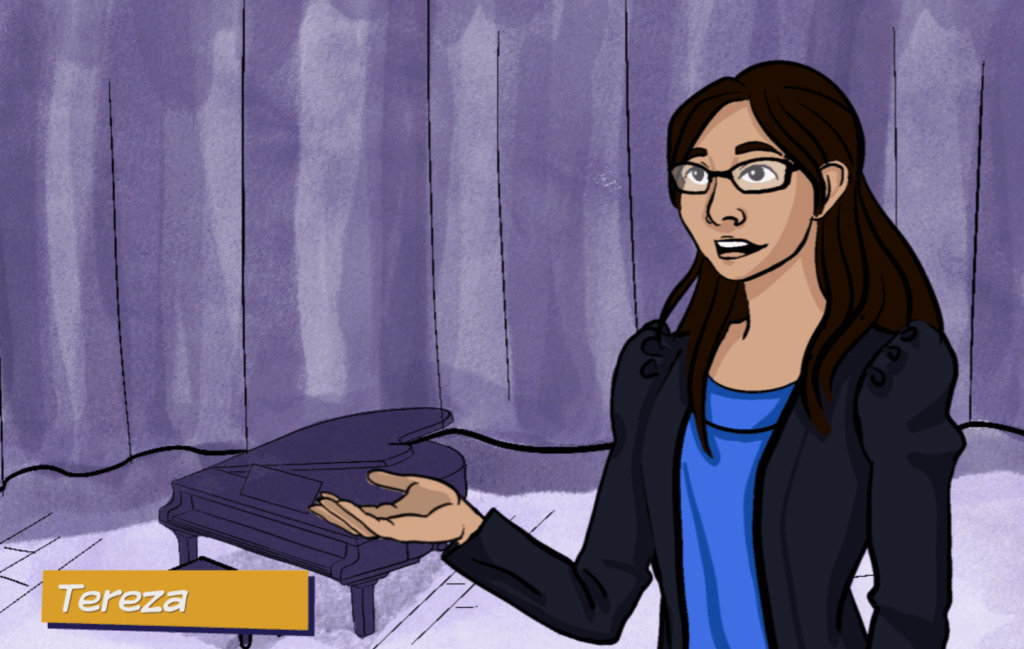
Tereza Lee graciously recorded herself playing the piano for this project. Please enjoy listening to her ‘exceptionally clear touch’.
Thank you DePaul University’s Jarvis College of Computing and Digital Media (Jarvis CDM) students for their essential contributions to this project.
- Homa Alai*, Samantha Fuentes*, Yuna Shin* – 2D art
- Kai Hakomori* and Bradley Estacio* – game development
- Jesvin John* – UX design and research
- Miles Hutto, sound composition
- Aech Ashe, Kavin Tharanee, and Ananth Thiruthuvadoss – sound design
- Sheila Holtschneider* and HyeSeung Lee* – logo design
* Funded research assistant, Jarvis CDM
Special thanks to NERDLab Miami for making and providing their Answer Campus conversation template, a framework which allowed us to accelerate the development of this project in Unity and, in turn, allowed for Dr. Tereza Lee and her story to be part of the growing “Answerverse”.